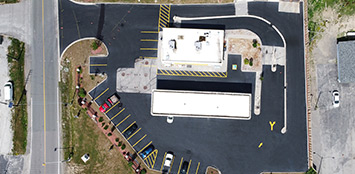

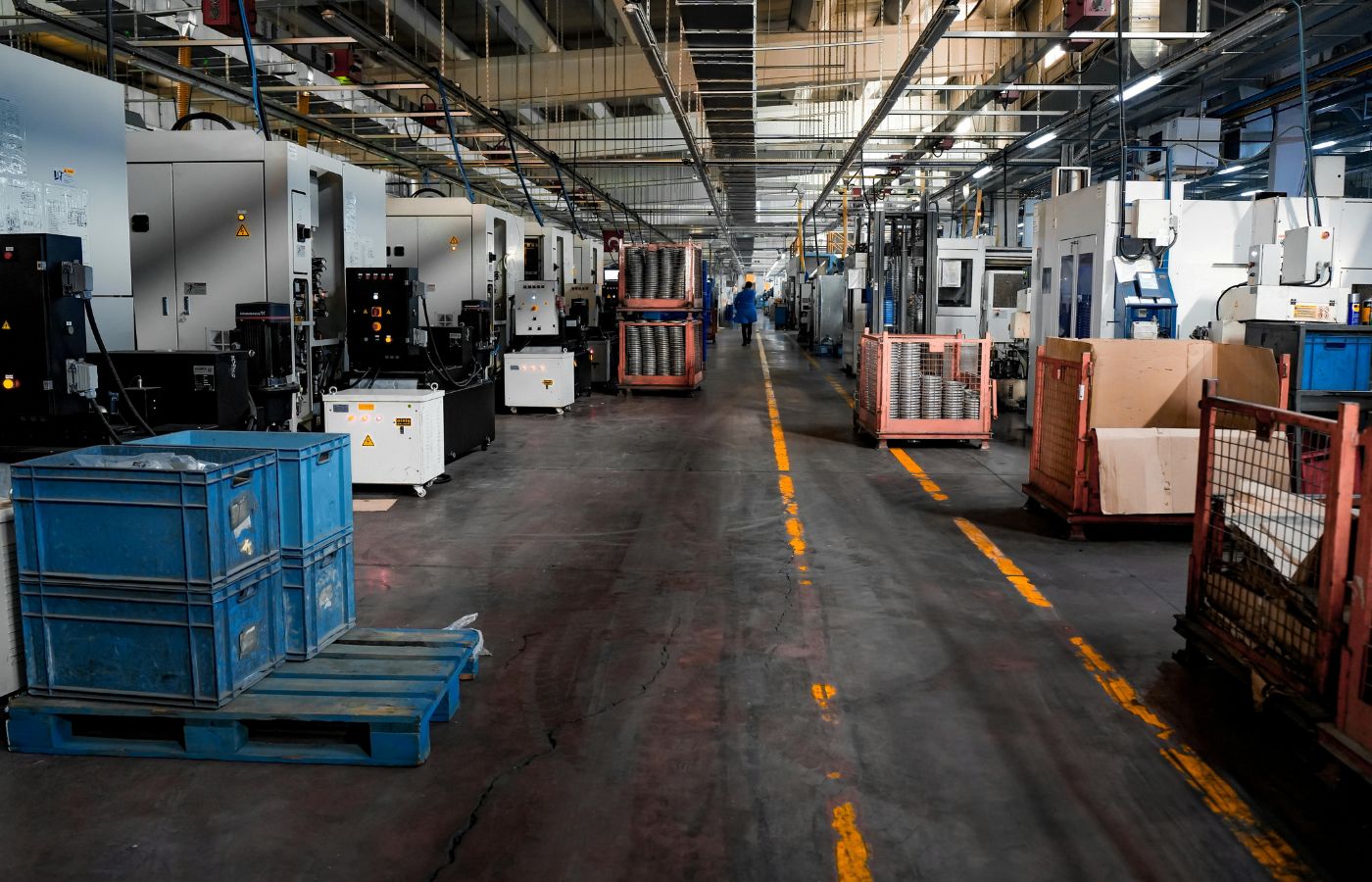
If you look at your current floor markings for factories and see fading lines or peeling tape, you might already be looking at a potential liability. We have noticed these faded lines, especially in parking lots across the GTA, where the safety lines have virtually disappeared, turning the production floor into a free-for-all for forklifts and pedestrians. It is chaotic, it kills efficiency, and frankly, it is dangerous. The difference between a safe, productive plant and one prone to accidents often comes down to the clarity of the lines on the ground.
You might think painting a few yellow stripes is a cosmetic job, but it is actually a strict regulatory requirement. You don’t need the headache of trying to understand Canadian safety standards and OSHA regulations while working a shift. We are going to cut through the noise and give you the practical standards you need to follow to keep your people safe and your facility compliant.
Why Floor Markings For Factories Are Critical For Safety
We frequently witness a facility manager treating line painting as an afterthought. However, one of the first things a safety inspector or the Ministry of Labour looks at when they enter your building is the floor. The main method of separating man from machine in a factory is through clear floor markings. Since there isn’t a visible “no-go” zone, a forklift driver isn’t technically breaking any laws by driving where he shouldn’t if there isn’t a clear walkway.
Bad markings have a huge efficiency cost in addition to the regulations. Your team will make educated guesses when they are unsure of the precise location of a pallet. This causes traffic bottlenecks at blind corners, blocked fire extinguishers, and encroached aisles. Striping correctly eliminates the need for thought.
It tells your employees exactly where to walk, where to stop, and where to stack goods, eliminating those micro-hesitations that slow down your entire operation. As we’ve discussed in our guide on the importance of line painting, clear boundaries eliminate the split-second hesitation of “Am I allowed to walk here?” that slows down operations hundreds of times a day.
Navigating OSHA and Canadian Safety Standards
While we operate in Canada, the OSHA 1910.22 standard (Walking-Working Surfaces) remains the industry benchmark that most multinational and local companies follow. This regulation explicitly states that all places of employment must be kept clean and orderly, and aisles must be clearly marked. It is not a suggestion; it is a mandate to keep traffic lanes defined.
Here in Ontario, we also look to the Canadian Centre for Occupational Health and Safety (CCOHS) guidelines. They reinforce that distinct marking is required to prevent collisions. The consensus across all these safety bodies is simple: if a hazard exists, it must be visually identified. Using professional-grade paint ensures these warnings stay visible longer than a few weeks, keeping you on the right side of the law.
1. The Real Rules on Aisle Width
A common mistake we fix is aisles painted too narrowly. You cannot just guess the width. The general rule for floor markings for factories regarding aisle width is that they must be at least three feet wider than the largest equipment being used. If you have a forklift carrying a standard pallet, you need clearance on both sides. For pedestrian-only traffic, you want a minimum of 28 inches, but we always recommend going wider if space permits to avoid that cramped feeling that leads to people stepping over the line.
2. The Universal Colour Code
Consistency is everything. You cannot have yellow mean “caution” in the shipping bay and “trash storage” in the assembly area. While OSHA says you must mark, the ANSI Z535.1 standard tells you how. This is the colour code we use for almost every industrial client because it instantly protects workers who might transfer between different sites.
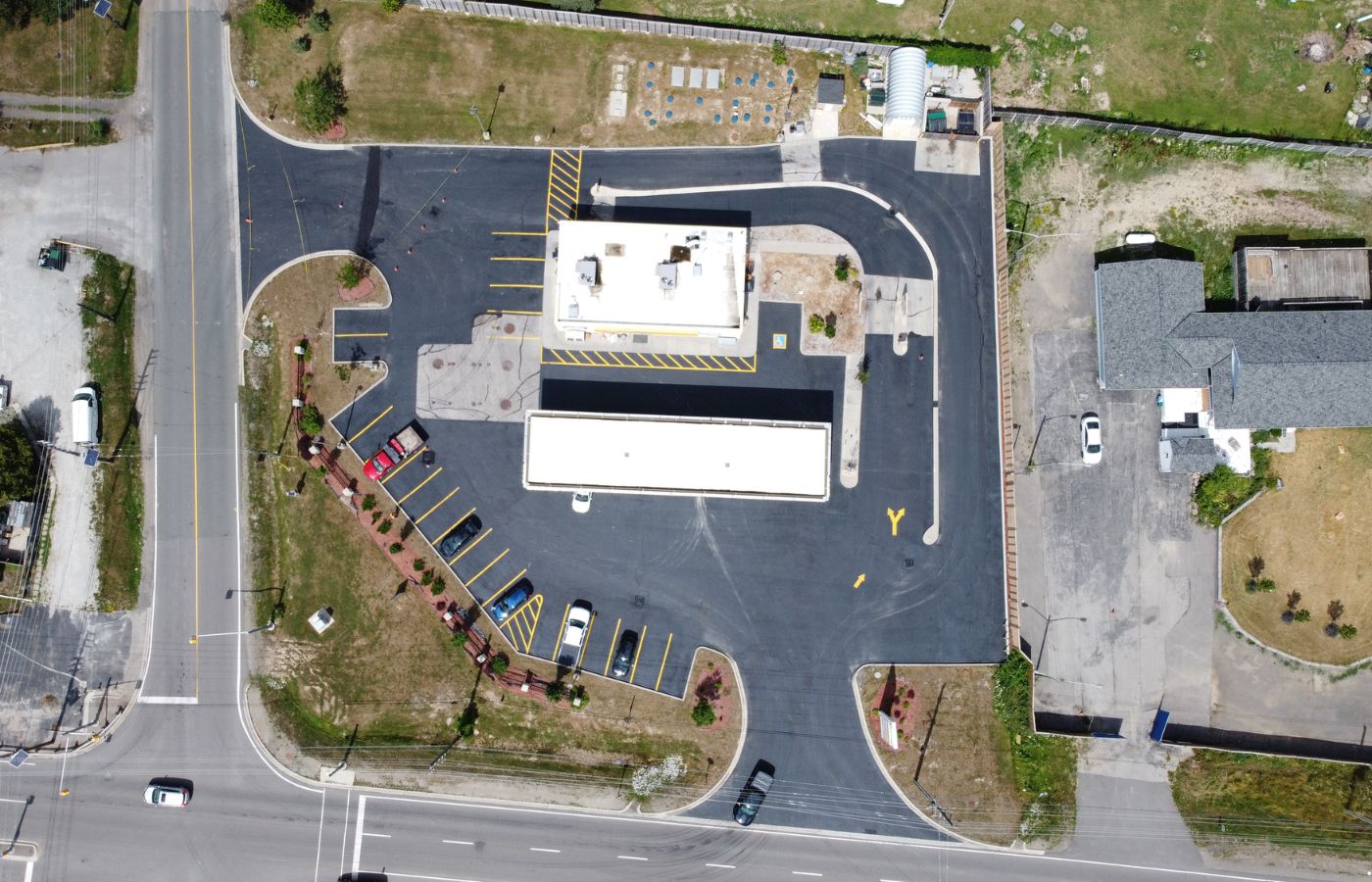
Here is the breakdown of what each colour should communicate on your floor:
| Colour | What It Means | Where We Apply It |
|---|---|---|
| Yellow | Caution / Traffic | The industry standard. Used for forklift lanes, pedestrian walkways, and aisle borders. |
| Red | Danger / Stop | Strict “No Go” zones. Used for fire extinguishers, electrical panels, and stop bars at intersections. |
| White | Production / Storage | Used to outline racks, machines, and raw material storage. It keeps inventory organized. |
| Orange | Warning / Inspection | Often used for quality control, holding areas or energizing equipment parts. |
| Green | Safety / First Aid | Marks the location of eye wash stations, safety showers, and first aid kits. |
| Black/Yellow Stripe | Physical Hazard | Indicates tripping hazards, low beams, or edges of loading docks. |
| Red/White Stripe | Keep Clear | Do not block these areas. Mandatory clearance for fire safety or electrical access. |
Paint vs. Tape: A Contractor’s Honest Advice
We get asked about floor tape constantly. It seems cheaper and easier to apply yourself. But here is the reality we see on the ground: tape fails. In a busy factory with forklifts dragging pallets and tires spinning on concrete, tape peels up, cracks, and becomes a trip hazard itself within months. You end up spending more money replacing it constantly than you would have spent doing it right the first time.
For high-traffic floor markings for factories, we often recommend industrial-grade epoxy or urethane paint. We prep the floor by cleaning and sometimes grinding the surface to ensure a mechanical bond. Epoxy withstands chemical spills, daily scrubbing, and the heavy abuse of industrial tires far better than any adhesive tape can.
Extending Organization to the Parking Lot
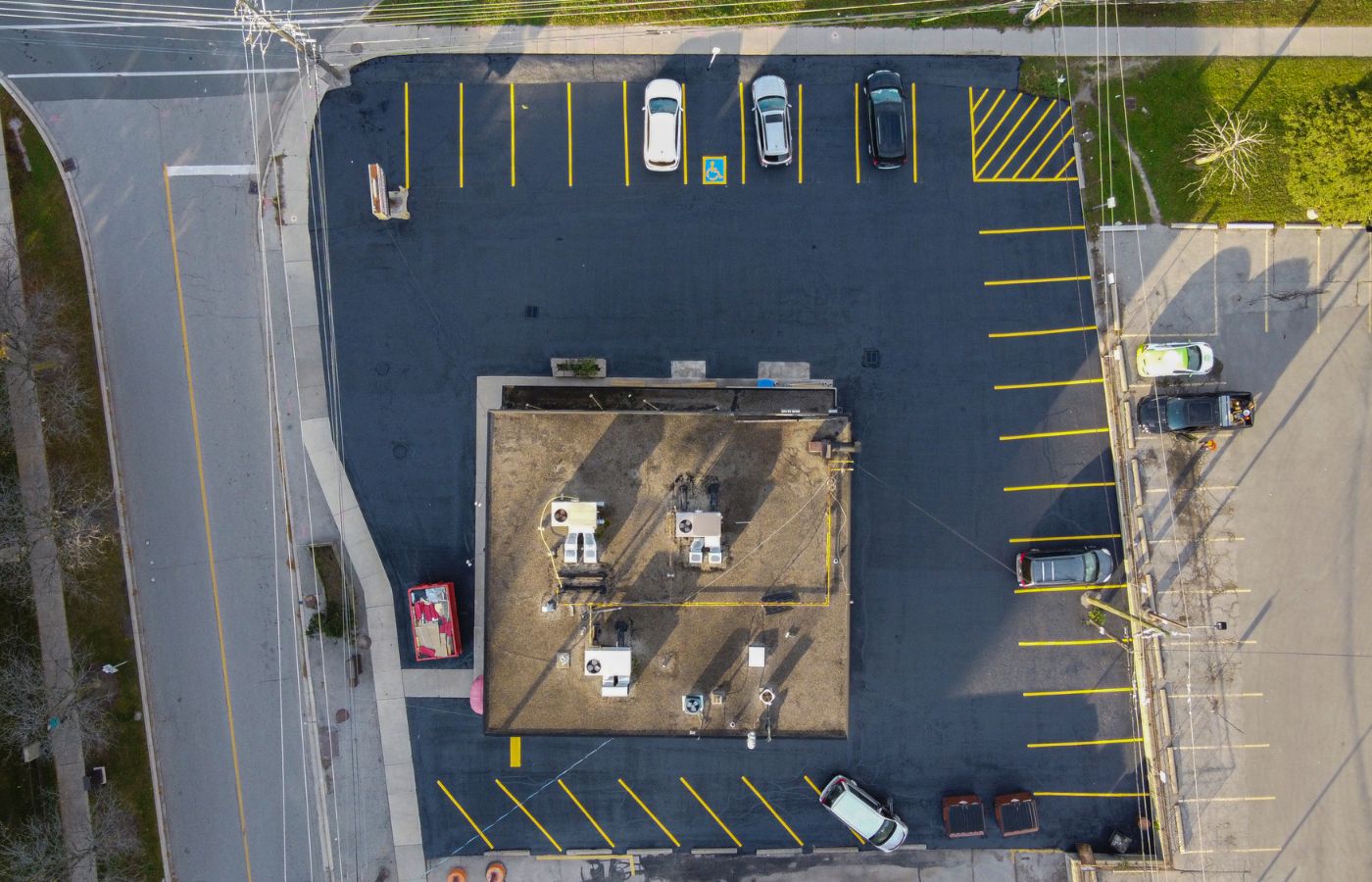
Safety does not magically stop at the loading dock door. We notice that many facilities have pristine interior floors, but a complete disaster outside. Your exterior logistics are just as vital. Delivery trucks need clear bays, employees need safe walking paths to their cars, and traffic flow needs to be managed during shift changes to prevent fender benders.
You must maintain the same level of discipline for your exterior as you do for your interior aisles. We manage this changeover with ease, making sure that when you paint new parking lot lines satisfy the exacting requirements of your interior safety procedures. From the moment they drive onto your property, it conveys to everyone that safety is a top priority.
Best Practices for Applying Floor Markings For Factories
Don’t just start painting your facility if you want to update it. A “less is more” strategy is what we advise. Painting every square inch of the floor in a variety of colours produces visual noise that eventually goes unnoticed by employees. Travel lanes, hazard zones, and permanent storage are the essentials.
Using “shadow boards” on the floor for mobile equipment is another piece of advice from the field. Paint a box for your cleaning carts, pallet jacks, and trash cans. It is immediately apparent when an item is not in its box. This is a fundamental component of the 5S methodology, which maintains a factory’s cleanliness without continual management intervention.
Getting your floor markings for factories right is an investment in a smoother, safer operation. It protects your people, satisfies the inspectors, and speeds up your workflow. If your current lines are faded or non-existent, it is time to clear the floor and get it done right.