

Every spring, thousands of Ontario homeowners walk out to their driveway, look down, and wonder where that massive new crack came from. You didn’t park a tank on it, and no earthquakes hit your neighborhood. So, what exactly happened under the snow?
Quick Answer (Overview): The primary cause of Ontario winter asphalt damage is the freeze-thaw cycle. When melted snow seeps into microscopic surface cracks and freezes, the water expands by 9%, creating immense pressure that forces the asphalt apart. Combined with the corrosive chemical breakdown from de-icing salts and the physical scraping of metal snow shovels, this continuous winter stress causes premature crumbling, alligator cracking, and potholes.
Let’s break down the actual science of what happens to your pavement when the tem perature drops, and more importantly, how you can stop the bleeding.
The Hidden Enemy: The Freeze-Thaw Cycle
Asphalt is a incredibly resilient material, but it is naturally porous. Over time, UV rays from the summer sun dry out the liquid asphalt binder that holds the sand and stone together. This causes microscopic fissures to form on the surface.
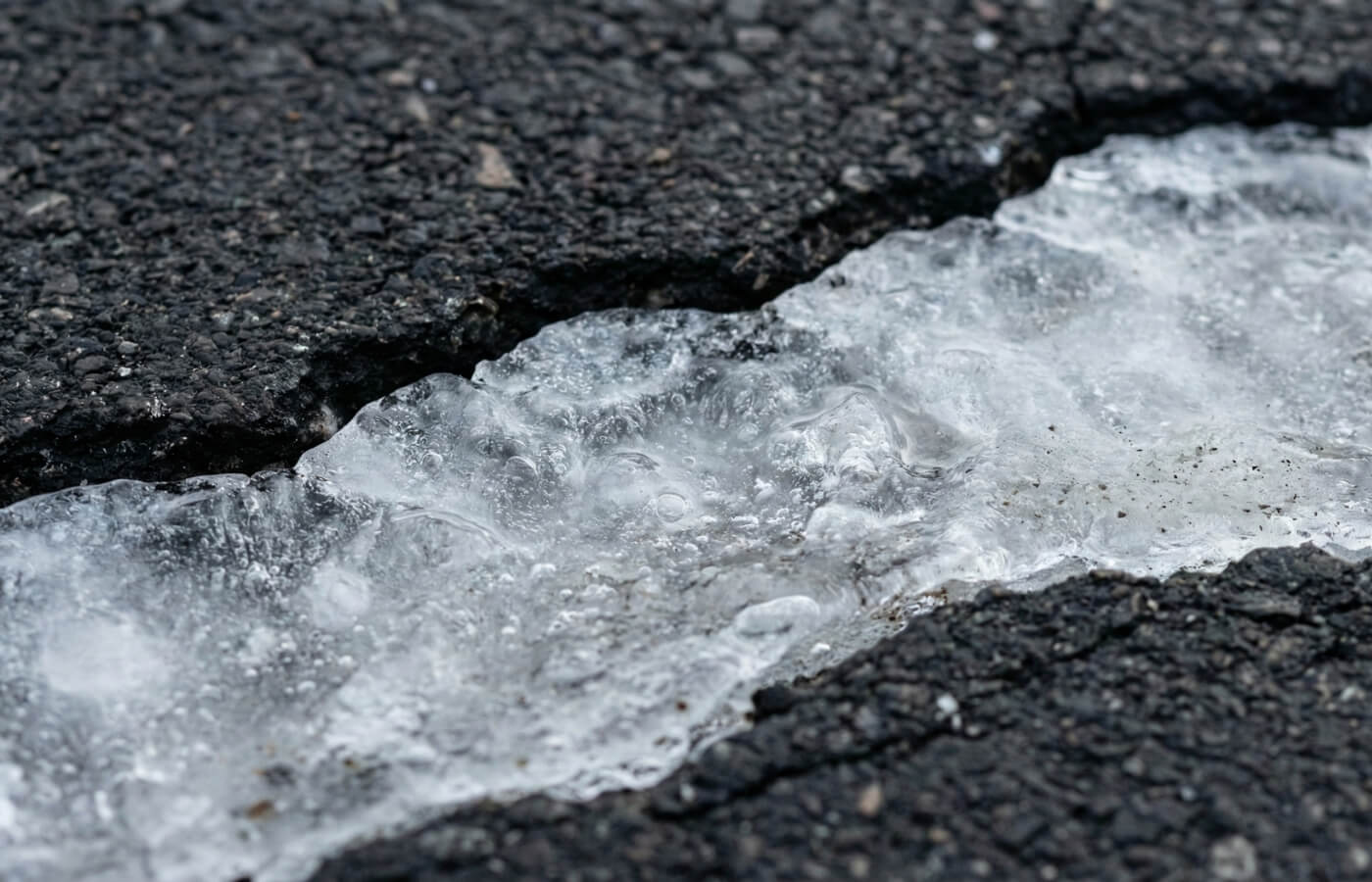
When November rolls around and the snow begins to melt during a sunny afternoon, that water has to go somewhere. It seeps directly down into those tiny fissures. When the sun goes down and temperatures plummet, that trapped water freezes.
Here is where the physics turn against you: water expands by roughly 9% when it turns into ice. This is a scientific process known as frost weathering, and it generates an incredible amount of outward pressure—up to 30,000 pounds per square inch. The cold, brittle asphalt has zero flexibility, so it simply snaps.
If you’re noticing Ontario winter asphalt damage, the freeze-thaw cycle is usually the main culprit. A tiny hairline fracture in December can easily evolve into a gaping chasm by April.
The Chemical Reality of De-Icing Salts
We all use road salt. It keeps our cars out of the ditch and stops us from slipping on our walk to the mailbox. However, standard rock salt (sodium chloride) plays a massive, unseen role in destroying your driveway.
Salt doesn’t actually eat away at the asphalt directly like battery acid. Instead, it creates a vicious cycle. Salt lowers the freezing point of water. This means that instead of water freezing once and staying frozen all winter, it melts and refreezes constantly as the ambient temperature fluctuates around that new, artificially lowered freezing point.
While salt keeps us from slipping, it heavily accelerates Ontario winter asphalt damage by multiplying the number of freeze-thaw cycles your driveway goes through in a single season. Furthermore, the chemical runoff can break down the organic binder in the asphalt over time, leading to aggregate loss (when the stones start popping out of the surface).
Smart Salting Practices:
- Switch to Calcium Chloride: It works at much lower temperatures than standard rock salt and generally requires fewer applications.
- Use Sand for Traction: If the ice is already thick, skip the excess salt and use sand. It provides grip without initiating a chemical melting cycle.
- Sweep Up Excess: Once the pavement is dry, sweep up the leftover salt crystals so they don’t sit on the asphalt until the spring rains wash them into the groundwater.
Shovels, Plows, and Mechanical Stress
We often focus on the weather, but human intervention does plenty of harm too. Think about the physical impact of clearing snow.
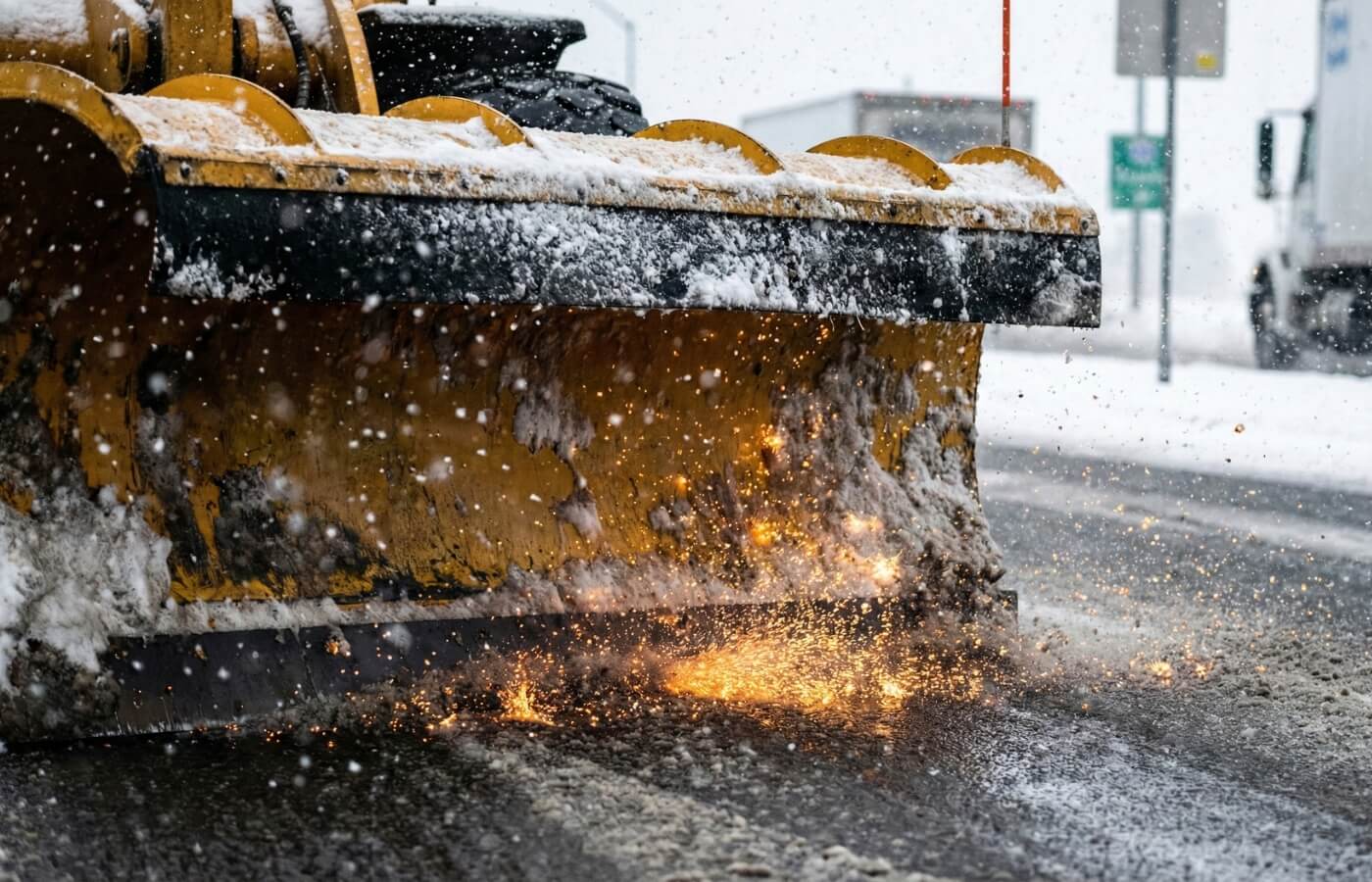
Mechanical scraping from metal shovels and heavy plows is another leading factor in Ontario winter asphalt damage, as they literally shave off the top protective layer of your pavement. Every time a sharp metal edge catches a slightly raised edge of a crack, it chips away pieces of the asphalt.
If you use a snow clearing service, those heavy trucks bring thousands of pounds of weight onto a surface that is already rigid and brittle from the sub-zero temperatures. To prevent this from turning into a total driveway replacement, it is absolutely vital to catch the damage early by addressing those early surface fractures with driveway crack filling before the next winter hits.
Defending Your Driveway Before the Snow Flies
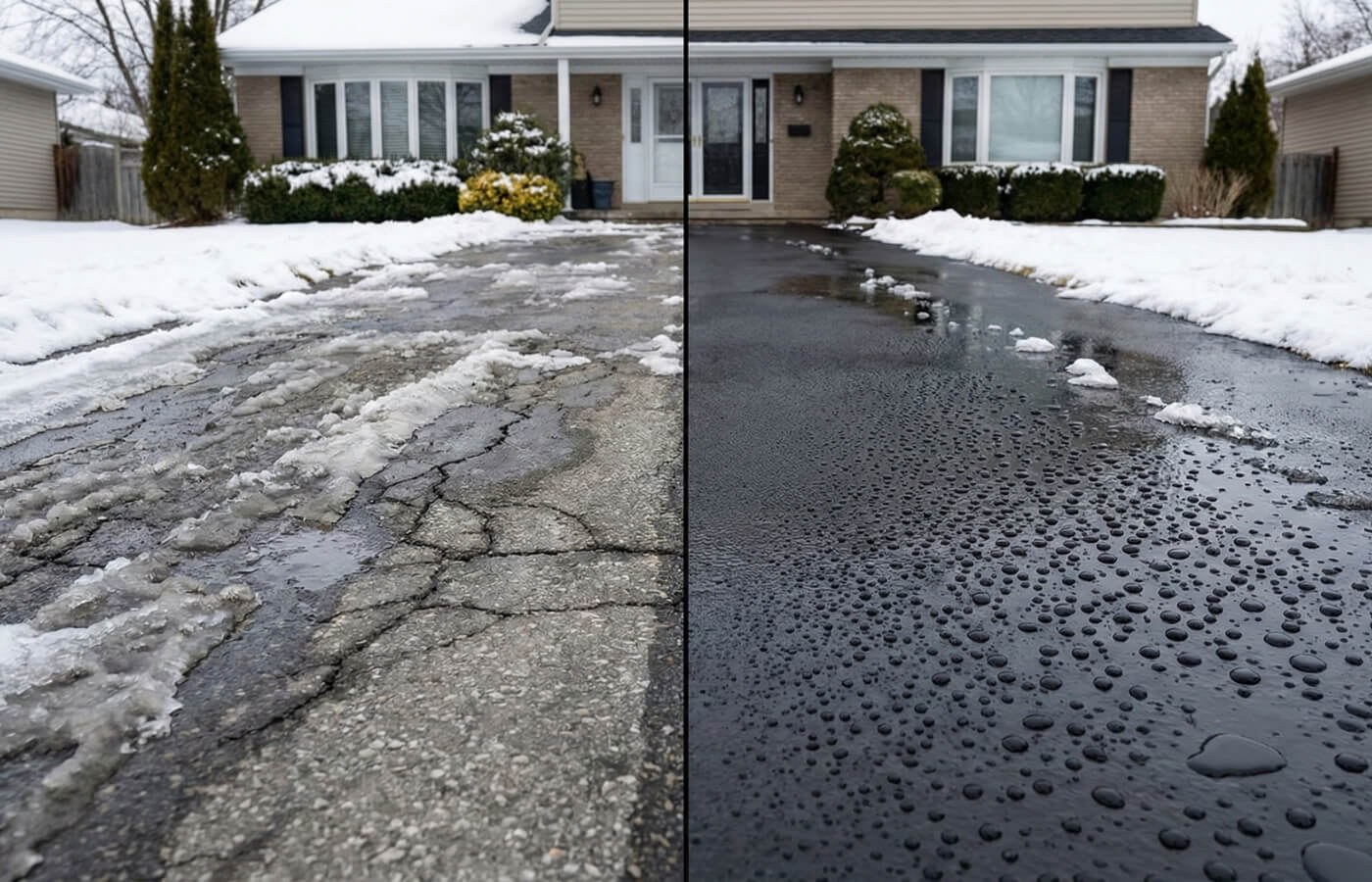
You wouldn’t leave bare wood exposed to a snowstorm, and you shouldn’t leave bare asphalt exposed either. Asphalt isn’t a “set it and forget it” surface. It requires a barrier to repel moisture.
When water beads up and rolls down to the street instead of penetrating the surface, the freeze-thaw cycle is stopped dead in its tracks.
This is achieved by replenishing the protective binder and creating a waterproof shield, effectively protecting your investment with professional driveway sealing services.
A proper sealcoat acts like a heavy-duty winter jacket for your pavement. It fills in the microscopic pores, creates a smooth surface that shovels glide over without catching, and actively resists the chemical penetration of road salts and automotive oil drips.
The Reality of Spring Maintenance
You can’t control the weather, but you can control how much Ontario winter asphalt damage you allow to take hold year over year. Neglecting those small cracks in May guarantees you will be dealing with massive potholes by next March.
Walk your driveway when the snow finally clears. Take note of the fading color, the new spiderweb cracks, and any areas where water is pooling instead of draining. If your asphalt is looking grey, brittle, and tired, it’s time to act. Book a professional assessment early in the season to seal out the moisture before the summer sun bakes the surface even further.